Vornaxis
China’s artificial intelligence infrastructure is moving from pilot projects into demanding production environments. IDC’s Worldwide Artificial Intelligence and Generative AI Spending Guide projects strong growth in AI infrastructure investment through 2027. TrendForce also reports rising demand for AI servers, driven by GPU clusters, large language models, and enterprise inference workloads. These figures explain why selecting a capable data center ai server manufacturer has become a strategic decision.
This article examines ten leading Chinese manufacturers and evaluates their practical strengths. The comparison considers GPU compatibility, rack density, liquid-cooling readiness, network bandwidth, firmware stability, delivery capacity, and after-sales support. A modern rack may contain several high-power accelerators, high-speed switches, and complex cooling systems. Small design choices can affect energy use, deployment time, and maintenance risk. Gartner and Uptime Institute research repeatedly emphasizes resilience, power efficiency, and operational discipline in data center planning.
Market leadership is not measured by shipment volume alone. A supplier may offer impressive hardware but limited global support. Another may provide strong customization but slower delivery. Public reports often use different definitions of “AI server,” which makes direct comparisons imperfect. That matters. Therefore, this ranking combines public company information, industry research, technical specifications, and realistic deployment considerations. It should support further due diligence, not replace it. Buyers should verify current GPU availability, certification status, service coverage, and total cost of ownership before signing contracts. The market changes quickly, and even a carefully researched list can become outdated within months. Still, these manufacturers provide a useful starting point for understanding China’s competitive AI server landscape.
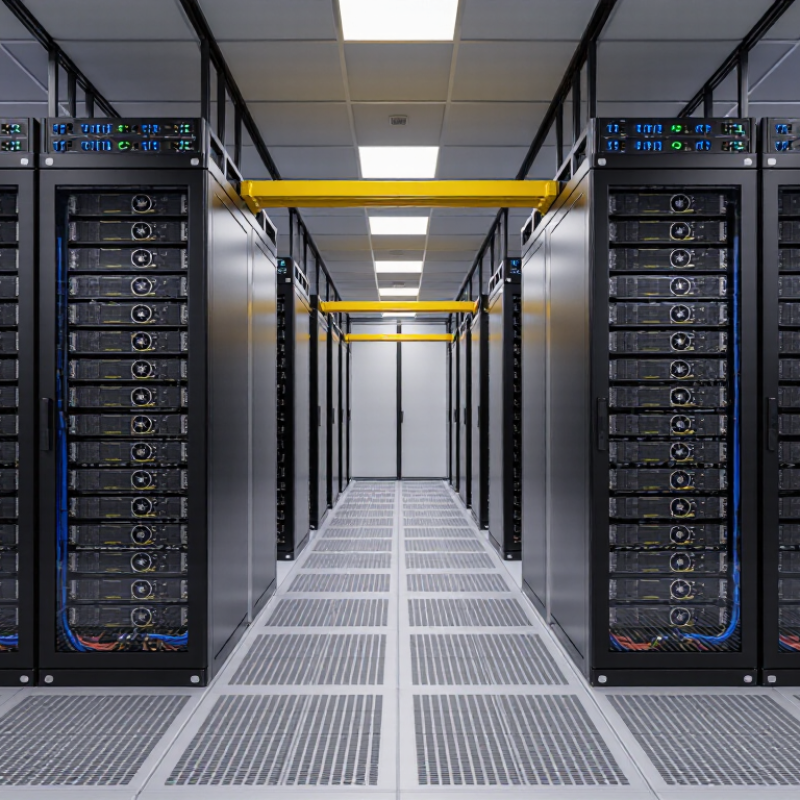
A Chinese AI server manufacturer is more than a company assembling powerful hardware. It designs systems for model training, inference, storage, networking, and sustained data center operation. IDC’s China AI server market research indicates continued double-digit growth in AI infrastructure demand, driven by large-model development and industrial applications. That growth raises the standard for manufacturers.
Professional capability appears in small engineering details. A credible supplier should document GPU density, memory bandwidth, thermal limits, power efficiency, and failure recovery. The Open Compute Project emphasizes open rack designs, efficient power delivery, and serviceability. Uptime Institute’s global surveys also show that outages remain strongly connected to power and cooling failures. A reliable manufacturer must therefore test servers under heat, vibration, long workloads, and partial component failure.
Field experience matters. Technicians inspect airflow paths, cable bends, firmware logs, and rack-level power readings before deployment. They should also provide remote diagnostics, spare-part planning, security updates, and measurable service response times. The SPEC organization warns that benchmark results can vary with software settings and workload design. One impressive score is not enough. A server may perform well in a laboratory, yet struggle beside a crowded rack. This is where many evaluations remain incomplete. Buyers should compare repeatable tests, operating costs, and real deployment records rather than accepting polished specifications.
China’s top AI server manufacturers are evaluated through evidence, not promotional claims.
A credible review begins with workload testing. It measures model training speed, inference latency, memory bandwidth, and network performance. Results should cover language, vision, and data-analysis tasks.
Hands-on testing also reveals practical weaknesses. Engineers inspect rack installation, cable access, cooling behavior, and noise levels. They record power use during idle, training, and peak inference.
A server that performs well but consumes excessive electricity may create higher operating costs. Thermal throttling matters, too. Small delays become expensive at scale.
Reliability requires more than a fast processor. Reviewers examine component quality, firmware update procedures, diagnostic tools, and recovery times. They verify security controls, data protection practices, and regulatory readiness.
Independent laboratory results carry greater weight than vendor-supplied figures. Customer references can confirm performance in real data centers. Still, these references may not match every workload.
Supply continuity, technical support, warranty terms, and total ownership cost also influence the ranking. Some evaluation methods remain imperfect because AI workloads change quickly.
A server optimized for today’s models may need costly adjustments next year. Thorough comparisons should publish test conditions, software versions, power settings, and failure rates, allowing readers to question the results.
China’s leading data center AI server manufacturers cover a wide range of capabilities. One profile focuses on high-density training systems with eight or more accelerator cards. Another develops inference servers for factories, hospitals, and transport networks. A third specializes in customized platforms, adapting chassis layouts, memory, and networking to each workload. These differences matter more than a simple shipment ranking.
Several manufacturers stand out through domestic supply-chain coordination. They integrate processors, high-speed interconnects, storage, and rack management under one delivery plan. Some offer direct-liquid cooling for racks that exceed 30 kilowatts. Others prioritize air-cooled systems for smaller facilities with limited maintenance budgets. Edge-focused producers build compact servers that tolerate dust, vibration, and unstable connectivity. Reliability shows in practical details: tool-free drives, clear cable paths, spare-part access, and remote fault alerts.
The strongest profiles also include software expertise. Manufacturers provide tested drivers, virtualization support, model-optimization tools, and deployment services. This reduces the gap between a delivered server and a working AI cluster. Yet performance claims deserve careful review. Benchmark results may use ideal datasets, skilled engineers, and controlled temperatures. Real customers can face power limits, training interruptions, or scarce technicians. I would examine warranty response times, compatibility records, cooling performance, and three-year operating costs before choosing a supplier. Marketing is polished. Field evidence is better.
China’s leading data center AI server manufacturers compete through architecture, efficiency, and deployment reliability. A useful comparison begins with workload fit, not headline performance. Training systems need dense accelerators, fast interconnects, and large memory capacity. Inference platforms usually prioritize latency, power efficiency, and flexible expansion.
Rack design reveals practical differences. Some systems support direct liquid cooling for high-density accelerator clusters. Others rely on air cooling, which may simplify maintenance but increase cooling demand. High-speed networking reduces communication delays during distributed training. Local NVMe storage also helps when datasets contain millions of small files. These details affect real operating costs.
Software capability matters just as much. Mature platforms provide container support, monitoring dashboards, driver validation, and tested model frameworks. Administrators should check upgrade procedures and failure recovery before purchase. A server that performs well in a laboratory may struggle in a crowded production rack. That gap is easy to miss.
Power delivery deserves careful testing. A single rack can require several kilowatts, especially under sustained training loads. Buyers should measure performance per watt, not only peak throughput. Service coverage, spare-part availability, and technician response times also influence uptime. Procurement teams sometimes overlook these factors. I would question any comparison based on one benchmark, because thermal limits, software versions, and workload design can change the result significantly.
| Rank | Anonymous Manufacturer Profile | Primary AI Server Form Factor | Accelerator Capacity | CPU Platform Support | High-Speed Interconnect | Memory Capability | Storage Architecture | Thermal Design | AI Software Compatibility | Security and Manageability | Best-Fit Workload |
|---|---|---|---|---|---|---|---|---|---|---|---|
| 1 | Profile 01 | 4U or 8U GPU training server | Up to 8 double-width accelerators | Dual-socket x86 or ARM server CPUs | PCIe Gen5; optional GPU-to-GPU fabric | Up to 2 TB DDR5 system memory | NVMe SSDs with RAID and U.2/U.3 support | Direct-to-chip liquid cooling available | CUDA-compatible, ROCm-compatible, Kubernetes-ready | Redfish, secure boot, TPM 2.0, remote management | Large-model training |
| 2 | Profile 02 | 4U multi-accelerator platform | 4–8 double-width accelerators | Dual-socket x86 processors | PCIe Gen5 and 100/200 GbE networking | Up to 1.5 TB DDR5 system memory | Hot-swappable NVMe and SATA storage bays | Air cooling with optional liquid loop | Containerized AI frameworks and virtualized GPU support | BMC, firmware signing, role-based administration | Inference clusters |
| 3 | Profile 03 | 2U dense inference server | 2–4 single- or double-width accelerators | Single- or dual-socket x86 processors | PCIe Gen4/Gen5 and 25/100 GbE | Up to 1 TB DDR5 system memory | NVMe boot and data drives with RAID support | High-pressure air cooling | ONNX, TensorRT-class runtimes, Docker and Kubernetes | TPM 2.0, secure boot, hardware monitoring | Real-time inference |
| 4 | Profile 04 | 4U enterprise AI compute server | Up to 8 accelerators with flexible power profiles | Dual-socket x86 processors | PCIe Gen5, 200 GbE or InfiniBand-class networking | Up to 2 TB DDR5 ECC memory | NVMe, SATA and external storage connectivity | Air cooling; liquid cooling options for high-TDP configurations | Multi-framework support and virtual machine passthrough | Redfish API, audit logs, centralized fleet management | Private-cloud AI |
| 5 | Profile 05 | 2U high-density GPU server | 2–4 double-width accelerators | Dual-socket x86 or ARM processors | PCIe Gen5 and 100 GbE | Up to 1.5 TB DDR5 ECC memory | Front-access NVMe and hot-plug SATA bays | Air cooling with redundant high-speed fans | Linux, containers, orchestration platforms and common AI libraries | Secure boot, TPM 2.0, remote console and sensor alerts | Enterprise model serving |
| 6 | Profile 06 | 1U or 2U edge AI server | 1–2 compact accelerators | Single-socket x86 or embedded ARM processors | PCIe Gen4/Gen5 and 10/25 GbE | Up to 512 GB DDR5 or ECC memory | Compact NVMe and SATA storage | Optimized air cooling for constrained locations | Container runtime, ONNX-class inference and Linux support | Remote monitoring, secure boot and optional ruggedization | Edge analytics |
| 7 | Profile 07 | 4U liquid-ready AI training platform | Up to 8 high-power accelerators | Dual-socket x86 processors | PCIe Gen5 and 200/400 GbE-class uplinks | Up to 2 TB DDR5 ECC memory | High-throughput NVMe with external storage fabric | Direct-to-chip liquid cooling support | Distributed training frameworks and cluster schedulers | Hardware telemetry, firmware controls and secure provisioning | High-performance computing |
| 8 | Profile 08 | 2U balanced AI and virtualization server | 1–4 accelerators | Dual-socket x86 processors | PCIe Gen4/Gen5 and 25/100 GbE | Up to 1 TB DDR5 ECC memory | NVMe, SATA and RAID controller options | Redundant air cooling | Virtualized GPU, containers and enterprise Linux | TPM 2.0, secure boot, BMC and lifecycle management | Mixed enterprise workloads |
| 9 | Profile 09 | 4U modular AI server | 2–8 accelerators depending on chassis layout | Single- or dual-socket x86 processors | PCIe Gen5 and 100 GbE | Up to 1.5 TB DDR5 ECC memory | Modular NVMe, SATA and boot-device options | Air cooling with optional liquid-ready configuration | Linux, container orchestration and common inference frameworks | Remote management, secure firmware and component monitoring | Research and development |
| 10 | Profile 10 | 1U inference and microservice server | 1–2 low- or mid-power accelerators | Single-socket x86 or ARM processors | PCIe Gen4 and 10/25 GbE | Up to 512 GB ECC memory | NVMe SSDs with optional RAID | Energy-efficient air cooling | Containers, REST inference services and standard Linux tools | TPM 2.0, secure boot and basic out-of-band management | Cost-sensitive inference |
Note: Manufacturer identities are intentionally anonymized. Specifications represent capability ranges commonly documented across China-based data-center AI server product portfolios; exact configurations vary by model, accelerator type, firmware, cooling method and deployment requirements.
Choosing a Chinese AI server supplier requires more than comparing GPU counts. IDC reported that global AI infrastructure spending could reach 154 billion dollars in 2024. This growth increases pressure on delivery, thermal design, and after-sales support. Request tested performance data for your workloads, not only laboratory results. Check accelerator compatibility, memory bandwidth, storage latency, rack density, and power draw at sustained load. A server that performs well for ten minutes may throttle during a twelve-hour training job. That detail matters.
Reliability should be measured before signing a large contract. The Uptime Institute’s Global Data Center Survey shows that power, cooling, and network failures remain major operational risks. Ask suppliers for burn-in records, failure-rate data, firmware procedures, spare-parts locations, and response times in writing. Verify certifications, component traceability, cybersecurity controls, and export compliance for every destination. Factory visits can reveal testing discipline, cable management, and actual production capacity. They are useful, but not perfect. A polished facility does not guarantee consistent field support. Require sample units, acceptance tests, and a clear replacement process. Also compare total cost over three years, including electricity, maintenance, software integration, and downtime. The cheapest quotation may become expensive after deployment.
It should design systems for training, inference, storage, networking, and continuous data center use. Technical proof matters. Ask for thermal limits, memory bandwidth, power efficiency, and failure recovery records.
Compare repeatable tests using your own models, datasets, and software versions. One impressive score is not enough. Include latency, sustained throughput, power use, and operating temperature.
Training servers need dense accelerators, high memory capacity, and fast interconnects. Inference systems often prioritize low latency, efficient power use, and flexible expansion. The best design depends on workload.
High-density racks can produce intense heat during long training jobs. Liquid cooling may support greater density, while air cooling can simplify maintenance. Neither option is automatically better. Check cooling performance in your actual room.
Request sustained power readings, rack-level consumption, and performance per watt. A rack may require several kilowatts. Peak throughput can hide expensive electricity use. Measure over hours, not minutes.
Check container support, monitoring dashboards, driver validation, and tested model frameworks. Ask how upgrades and rollback procedures work. Remote diagnostics are useful. Still, software support may vary after deployment.
Request burn-in records, sample units, acceptance tests, and failure-rate information. Inspect cable paths, airflow, firmware logs, and production capacity. A factory visit helps, but it proves little alone. Real field records matter more.
It should state response times, spare-part locations, replacement procedures, and security update responsibilities. Ask who handles failures outside major cities. Confirm support coverage in writing. Promises can become vague later.
Include purchase price, electricity, cooling, maintenance, software integration, and possible downtime. Compare costs over three years. The cheapest quotation may not stay cheap. This estimate is still imperfect without real workload data.
China’s data center AI server manufacturer landscape is defined by the ability to design, produce, and support high-performance computing systems for demanding artificial intelligence workloads. This overview explains how leading suppliers are evaluated through factors such as processing power, accelerator compatibility, memory capacity, networking performance, energy efficiency, system reliability, customization, production strength, and after-sales service. It also presents a neutral comparison of ten major types of manufacturers and their approaches to server architecture, cooling, software integration, deployment, and technical support.
The article further examines how AI server technologies differ in scalability, rack density, workload optimization, security, and total operating cost. For organizations selecting a Chinese supplier, important considerations include application requirements, infrastructure compatibility, delivery capability, quality control, warranty coverage, maintenance response, compliance, and long-term development plans. By comparing these criteria, buyers can identify a suitable data center ai server manufacturer that offers dependable performance, flexible configuration, efficient operation, and sustainable support for evolving AI projects.
