Vornaxis Vornaxis

Top 10 AI Training Server Manufacturers for Global Buyers?

Time:2026-10-24 Author:Liam
0%

Choosing an ai training server manufacturer now means evaluating more than GPU count. Buyers must examine cooling, networking, memory capacity, software support, and long-term service.

The Stanford AI Index 2025 reports that training compute for notable AI models has continued doubling roughly every five months. That trend changes purchasing decisions. A server with eight powerful GPUs may look impressive, yet poor airflow or weak storage can create expensive delays. IDC’s Worldwide AI and Generative AI Spending Guide also shows rapidly expanding investment in AI infrastructure through 2028. The market is growing quickly. Quality is not always growing with it.

NVIDIA CEO Jensen Huang captured the broader shift clearly: “Every company, every industry, every country is going to be an AI company.” His statement explains why global buyers need dependable hardware partners, not temporary component suppliers. This guide reviews ten leading manufacturers through practical criteria, including accelerator compatibility, rack density, liquid-cooling options, deployment experience, warranty coverage, and regional support.

The ranking is useful, but not absolute. Different workloads require different designs. Large language model training may prioritize GPU interconnects, while computer vision projects may value storage throughput and predictable costs. Some manufacturers publish detailed thermal data; others provide less transparency. That gap deserves attention.

Real procurement also includes unglamorous details. Check power connectors, maintenance access, spare-part delivery, and technician availability. A strong benchmark result cannot repair a server stranded at customs or waiting weeks for a replacement fan. This comparison aims to clarify those trade-offs for serious global buyers.
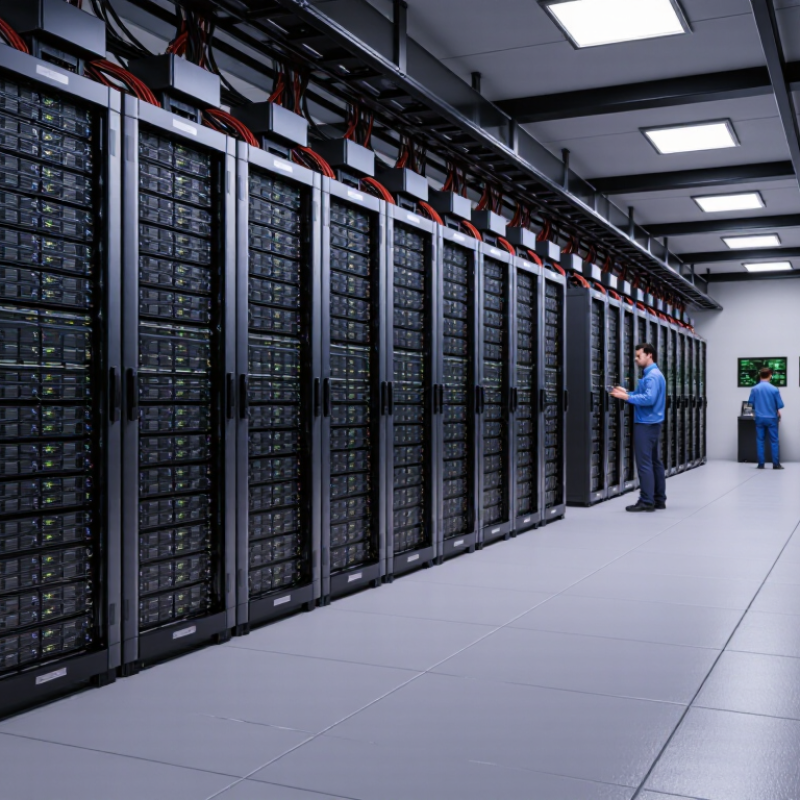
Top 10 AI Training Server Manufacturers for Global Buyers?

What Defines an AI Training Server Manufacturer

An AI training server manufacturer is more than a company that assembles powerful computers. It designs, tests, and supports systems built for sustained model training. Engineers must balance GPU density, processor performance, memory capacity, storage speed, and high-bandwidth networking. A well-designed chassis keeps airflow steady when accelerators run near full power for days.

Practical experience matters. Manufacturers should show thermal test records, rack-level power measurements, and performance results from real workloads. They need to explain how systems behave with large datasets, mixed precision training, and frequent software updates. Clear documentation is essential. So is responsive technical support. A buyer may need help replacing a failed power module at midnight, not merely a polished specification sheet.

Reliable manufacturers also maintain disciplined production and quality controls. Each server should pass firmware checks, stress testing, cable inspection, and burn-in procedures before shipment. Supply-chain transparency reduces unpleasant surprises, especially when memory or accelerator availability changes. Security deserves attention too, including controlled remote access and secure firmware practices. Compliance with regional requirements must be verifiable, not assumed.

No manufacturer gets every decision right. Some cooling designs look efficient but create difficult maintenance access. Some performance claims depend on ideal software settings. Buyers should ask for independent validation and request references from comparable deployments. The strongest manufacturer answers specific questions, admits limitations, and improves its systems after field failures. That honesty is practical expertise.

How AI Training Servers Are Designed and Configured

Top 10 AI Training Server Manufacturers for Global Buyers?

AI training servers are engineered around workload, not fashionable specifications. A computer vision model may need many accelerators, while language training demands dense memory and fast interconnects. Engineers begin by estimating model size, batch requirements, and expected training duration. That calculation determines accelerator count, processor capacity, memory, and storage speed.

The motherboard layout matters greatly. High-bandwidth links should connect accelerators with minimal communication delays. Large system memory supports data preparation and reduces repeated storage access. NVMe storage can feed training datasets quickly, while high-speed networking connects multiple servers into one cluster. Small details matter. Poor cable placement can restrict airflow and complicate maintenance.

Power and cooling deserve equal attention. A fully loaded rack may require several kilowatts, so facility limits must be checked before purchase. Direct liquid cooling can improve thermal stability, but it increases installation complexity. Redundant power supplies, replaceable fans, and remote monitoring improve reliability during long training runs. Experienced buyers also test firmware, drivers, and distributed training software together. Hardware alone does not guarantee useful performance.

A practical configuration should include benchmark results from similar workloads, not only peak accelerator numbers. Real performance may fall when memory access, communication, or cooling becomes a bottleneck. No design is perfect. Some teams still overspend on accelerators while ignoring storage pipelines and serviceability. A careful acceptance test should measure throughput, temperature, power use, and recovery after component failure.

Top 10 AI Training Server Manufacturers for Global Buyers

For global buyers, comparing the top ten AI training server manufacturers requires more than counting GPUs. A practical shortlist should examine accelerator availability, memory bandwidth, interconnect design, cooling, firmware, and service reach. IDC’s Worldwide AI and Generative AI Spending Guide, published in 2024, projects AI infrastructure spending to reach about $154 billion by 2027. Demand is rising quickly. However, shipment volume alone does not prove engineering quality. Stanford University’s AI Index 2024 notes that advanced model training can cost over $100 million. That makes thermal stability and predictable maintenance financially important. Ask each manufacturer for validated cluster references, failure rates, power figures, and repair-time data. Request evidence, not polished slides.

The strongest ten candidates should support dense accelerator nodes, high-speed fabric, ECC memory, secure boot, and open management interfaces. Liquid cooling can reduce rack pressure, yet it adds installation complexity and leak-control duties. Regional spare parts matter. So does staff training. Buyers should compare performance per watt, not only benchmark speed. Independent tests should use the same model, dataset, and software stack. Otherwise, results become marketing theatre. I would also check warranty exclusions, export documentation, and local safety certification before signing. No ranking stays perfect for long. A supplier may lead in compute density but lag in support or software integration. That weakness deserves weight.

Top 10 AI Training Server Manufacturers for Global Buyers
Rank Anonymous Manufacturer Primary Operating Region Typical Server Form Factors Typical Accelerator Density Maximum Common GPU Power Class High-Speed Networking Liquid-Cooling Availability Enterprise Certifications Customization Capability Best-Fit Buyer Profile
1 Manufacturer A North America and global distribution 4U GPU 8U multi-node Rack-scale 4–8 double-width accelerators per node Up to approximately 700 W per accelerator slot 100–400 Gb/s Ethernet or InfiniBand-class fabric Available on selected platforms Commonly available: CE, FCC, RoHS, ISO-aligned processes High: chassis, storage, networking, firmware and integration options Large enterprises, cloud providers and research institutions
2 Manufacturer B East Asia and global distribution 2U GPU 4U GPU 8U GPU 4–8 double-width accelerators per node Up to approximately 700 W per accelerator slot 25–400 Gb/s Ethernet and accelerator interconnect options Available for high-density configurations Regional safety, EMC and environmental compliance options High: memory, storage, rail kits, racks and thermal design International system integrators and AI data centers
3 Manufacturer C East Asia, Europe and North America 4U GPU 5U GPU Rack-scale 4–8 double-width accelerators per node Up to approximately 700 W per accelerator slot 100–400 Gb/s Ethernet or InfiniBand-class fabric Air and direct-liquid options available CE, FCC, RoHS and ISO 9001 commonly supported High: validated reference designs and custom configurations HPC centers, universities and managed service providers
4 Manufacturer D North America and Europe 1U CPU 2U GPU 4U GPU 2–8 accelerators per node Up to approximately 600–700 W per accelerator slot 25–200 Gb/s Ethernet and low-latency fabric options Available on selected high-density systems CE, FCC, RoHS, UL-related and ISO-aligned options Medium to high: strong configuration and support flexibility Corporate AI teams and mid-sized data centers
5 Manufacturer E East Asia and worldwide OEM channels 2U GPU 4U GPU 5U GPU 4–8 double-width accelerators per node Up to approximately 700 W per accelerator slot 100–400 Gb/s Ethernet and scale-out fabric options Available in premium AI systems CE, FCC, RoHS and region-specific approvals High: OEM, ODM and white-label deployment support Resellers, cloud builders and large-scale integrators
6 Manufacturer F Europe and global enterprise markets 2U GPU 4U GPU Blade systems 2–8 accelerators per node Up to approximately 600 W per accelerator slot 25–200 Gb/s Ethernet and cluster networking Available through specialized configurations CE, RoHS, ISO 9001 and enterprise procurement documentation Medium: strong integration, less emphasis on custom mechanics European enterprises, laboratories and public-sector buyers
7 Manufacturer G North America and Asia-Pacific 4U GPU 5U GPU Workstation 4–8 accelerators per node Up to approximately 700 W per accelerator slot 100–400 Gb/s Ethernet and specialized cluster fabrics Available for data-center product lines FCC, CE, RoHS and region-specific compliance packages High: workstation, server and rack integration options AI startups, studios and regional compute providers
8 Manufacturer H East Asia and emerging global markets 2U GPU 4U GPU 5U GPU 2–8 accelerators per node Up to approximately 600–700 W per accelerator slot 25–200 Gb/s Ethernet and cluster-ready uplinks Available for selected models CE, FCC, RoHS and local market certifications High: cost-focused chassis, storage and networking choices Value-oriented buyers and regional data-center projects
9 Manufacturer I North America, Europe and Asia-Pacific 1U CPU 2U GPU 4U GPU 2–4 accelerators per node Up to approximately 500–600 W per accelerator slot 25–100 Gb/s Ethernet and standard cluster interconnects Limited to selected enterprise systems CE, FCC, RoHS and enterprise quality documentation Medium: standardized platforms with configurable components SMEs, research groups and departmental AI deployments
10 Manufacturer J Asia-Pacific and international distribution 2U GPU 4U GPU Edge rack 2–8 accelerators per node Up to approximately 500–700 W per accelerator slot 25–200 Gb/s Ethernet and modular uplink options Available for selected high-performance systems CE, FCC, RoHS and country-specific certifications Medium to high: flexible regional sourcing and integration System integrators, edge facilities and growing AI teams

Comparison uses anonymous manufacturer profiles. Specifications are representative public-market ranges for current AI training server configurations; exact capacity, power limits, certifications and cooling options vary by model, accelerator selection and regional configuration.

How to Compare Manufacturers, Products, and Support

Global buyers should compare AI training server manufacturers through measurable evidence, not impressive accelerator counts. IDC projected worldwide AI infrastructure spending at about $154 billion in 2024, showing how quickly purchasing decisions are expanding. Request benchmark results for your workloads, including model size, tokens per second, memory use, and failure rates. A server that looks powerful may perform poorly with your software stack.

Product design also affects long-term cost. Check accelerator memory, interconnect bandwidth, storage throughput, rack density, and liquid-cooling requirements. The International Energy Agency expects data-center electricity demand to exceed 1,000 TWh annually by 2026. Power efficiency is no longer a minor specification. Ask for measured performance per watt, not only laboratory peak performance. Small details matter. Cable access matters.

Support deserves equal scrutiny. Require response-time commitments, firmware update procedures, spare-part availability, and technician coverage across your operating regions. Ask whether the manufacturer can diagnose a failed node remotely and provide a replacement schedule. The Uptime Institute reports that many serious outages still involve power, cooling, or human-management failures. That makes service quality part of system performance. Some comparisons remain imperfect because vendors use different test methods. Buyers should repeat tests on representative datasets before signing contracts. A spreadsheet can hide operational pain.

Top 10 AI Training Server Manufacturers for Global Buyers

How to compare manufacturers, products, and support

This chart presents a practical 100-point procurement framework for comparing AI training server manufacturers without ranking or displaying company-specific data. Buyers can use these weighted dimensions to evaluate GPU performance, scalability, total cost, delivery capability, and after-sales support.

Key Purchasing Factors for International AI Infrastructure Buyers

Top 10 AI Training Server Manufacturers for Global Buyers?

International buyers should evaluate infrastructure beyond processor counts. Power comes first. The IEA’s Electricity 2024 report estimates data centres used about 460 TWh globally in 2022. Demand could exceed 1,000 TWh by 2026. Therefore, buyers should verify rack density, cooling capacity, voltage compatibility, and local energy costs before signing contracts.

Interconnect performance deserves equal attention. Training jobs move enormous datasets between accelerators, storage, and memory. Ask manufacturers for measured bandwidth, latency, failure rates, and scaling results under realistic workloads. Stanford’s AI Index 2024 reported that advanced model training costs can reach tens of millions of dollars. A small communication bottleneck may waste expensive computing time. Compatibility with orchestration software, container systems, and existing storage also reduces migration risk.

Reliability needs evidence, not polished brochures. Request burn-in procedures, spare-part locations, repair targets, and firmware update policies. Support matters. Buyers should compare warranty coverage across countries, technician response times, and customs responsibilities. The Uptime Institute’s annual surveys repeatedly identify human error, power issues, and network failures among major outage causes. That makes remote monitoring and redundant power practical requirements.

I still see procurement teams choosing the lowest quotation too quickly. That choice can become expensive after installation. A cheaper server may consume more electricity, require specialized cooling, or lack regional service capacity. Procurement models should include five-year energy, maintenance, software, and downtime costs. Imperfect forecasts are unavoidable, but untested assumptions are not.

FAQS

What does an AI training server manufacturer actually provide?

It designs, tests, and supports systems for long training runs. Cooling matters. Support matters too, especially during overnight failures. A specification sheet alone is not enough.

How should buyers configure an AI training server?

Start with model size, batch requirements, and training duration. Then select accelerators, processors, memory, storage, and networking. Do not chase peak numbers blindly. A computer vision workload may need different hardware than language training.

Why are cooling and power important?

Fully loaded racks can consume several kilowatts. Check facility capacity, voltage, energy costs, and cooling limits before purchasing. Liquid cooling can improve stability. It also adds installation complexity.

What evidence should manufacturers provide?

Ask for thermal records, rack-level power measurements, and workload benchmarks. Request burn-in procedures and stress-testing details. Real results matter more than attractive claims. Some claims depend on ideal software settings.

How important are networking and interconnects?

They connect accelerators, memory, storage, and multiple servers. Ask for measured bandwidth, latency, scaling results, and failure rates. Small delays can waste expensive training time. Fast hardware cannot fix weak communication paths.

What reliability features should buyers look for?

Useful features include redundant power supplies, replaceable fans, remote monitoring, and recovery testing. Manufacturers should inspect cables and verify firmware before shipment. Spare parts should be available regionally. Failures happen.

How can international buyers compare total costs?

Include energy, maintenance, software, service, shipping, and downtime over five years. The lowest quotation may not be the cheapest solution. Specialized cooling can increase operating expenses. Forecasts remain imperfect, but assumptions should be tested.

What should an acceptance test measure?

Measure training throughput, temperature, power use, and recovery after component failure. Test hardware, drivers, firmware, and distributed software together. Check airflow and maintenance access physically. A design may look efficient, yet remain difficult to service.

Conclusion

Choosing the right AI training server manufacturer is essential for organizations building reliable, scalable, and high-performance computing infrastructure. This article explains what defines a qualified manufacturer, including engineering expertise, production capabilities, quality control, customization options, and long-term technical support. It also explores how AI training servers are designed and configured, covering processor selection, accelerator compatibility, memory capacity, storage, networking, cooling, power efficiency, and system expandability.

The guide presents a practical framework for evaluating leading manufacturers without focusing only on hardware specifications. Global buyers will learn how to compare product performance, deployment flexibility, warranty coverage, service responsiveness, documentation, and integration support. It also highlights important international purchasing factors such as regional compliance, logistics, total cost of ownership, maintenance availability, data center compatibility, and future upgrade requirements. By considering both technical and commercial priorities, buyers can select an AI training server solution that supports demanding workloads while providing dependable long-term value.

Liam

Liam

Liam is a dedicated marketing professional with a profound expertise in the industry, where he excels at highlighting the unique advantages of our core products. With a keen understanding of market trends and consumer needs, Liam frequently updates our company’s professional blog, providing......