Vornaxis
AI inference servers run trained models for real users, where response time, throughput, and uptime matter. The right system can serve language, vision, or recommendation workloads without wasting power or budget. But “top” depends on the job. A compact edge server faces different demands from a rack of GPU-dense machines in a data center.
This guide examines established suppliers, including Dell Technologies, HPE, Lenovo, and Supermicro, alongside specialist system builders. It considers what they offer, how their platforms support accelerators, and which details buyers should verify. Those details include memory capacity, cooling design, networking, software compatibility, service coverage, and upgrade options. Specifications help. Workload tests matter more.
It is tempting to choose by peak performance figures alone. They rarely tell the full story. A server that excels in a vendor demonstration may behave differently with a customer’s model, data flow, and concurrency levels. Readers should compare published specifications with independent benchmarks and, where possible, test representative workloads before purchasing. That takes time. It can prevent expensive surprises.
The phrase ai inference server manufacturer covers companies with varied roles: some design complete systems, while others specialize in components or configurable platforms. This distinction deserves attention. The following overview offers a practical way to compare manufacturers, understand trade-offs, and build a shortlist suited to real deployment needs—not just a headline number.
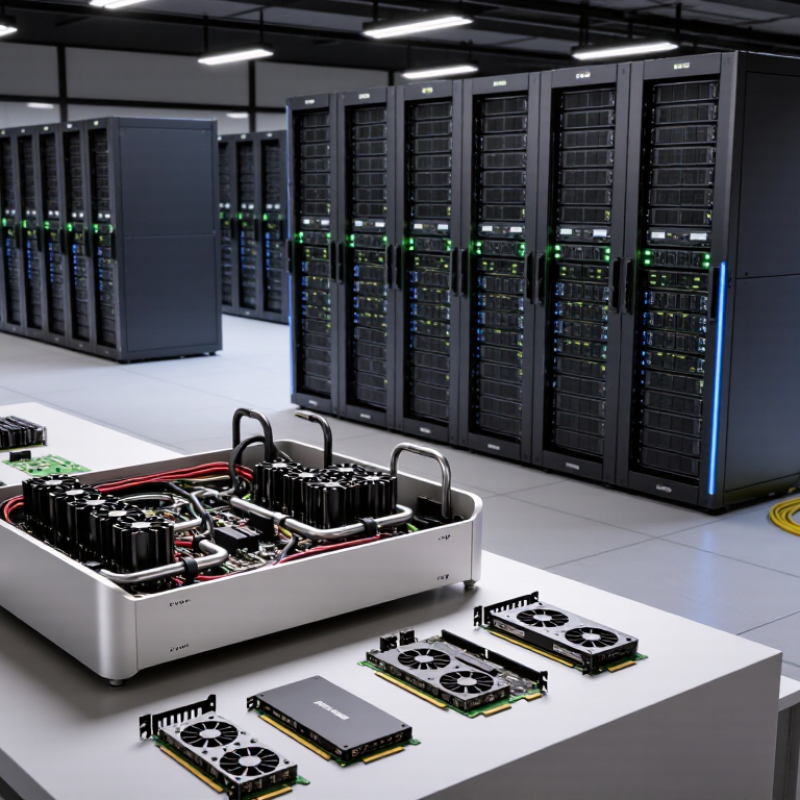
AI inference servers run trained models and produce answers, predictions, or classifications from live requests. Their job is not to teach a model, but to serve it reliably while people and applications wait. A customer-support system, for example, may need to process many short prompts without making users wait several seconds. That matters. Low latency and steady throughput are central requirements.
Hardware should match the model and workload. Accelerators can speed up computation, but memory capacity also matters because model weights and active requests must fit. Fast storage helps load models, while capable network interfaces reduce delays between servers. A useful evaluation measures response time under realistic traffic, not just peak performance on a quiet test system. Cooling and power delivery deserve equal attention; dense equipment can throttle when airflow is poor.
Operational requirements are less glamorous but important. Teams need compatible software, clear monitoring, secure access controls, and ways to replace failed components. Compare performance per watt and total operating cost, not purchase price alone. There is no perfect configuration. A setup tuned for large language models may waste resources on small vision workloads, and real traffic rarely matches a clean benchmark exactly. Re-test as models and demand change.
An AI inference server is a coordinated system, not just a powerful processor. Its accelerator executes model operations, while the CPU schedules requests, manages data movement, and handles routine tasks. Memory is critical. Model weights and active user requests both consume high-bandwidth memory; when capacity runs short, data transfers can slow responses. A practical design therefore balances accelerator compute, memory capacity, and memory bandwidth against the model’s actual workload.
The network interface and internal interconnect determine how quickly inputs and results move between components. For multi-accelerator systems, slow links can leave expensive processors waiting. Storage holds model files and logs, but it rarely replaces fast working memory. Heat is real. Cooling and power delivery also shape sustained performance: a server that throttles under heavy load may miss its latency target. The International Energy Agency’s Electricity 2024 report estimated data centers used about 460 TWh in 2022 and projected consumption could exceed 1,000 TWh by 2026, underscoring the value of measuring energy alongside throughput.
Software completes the stack. Runtime libraries, drivers, batching, and quantization affect how well hardware serves real requests. Stanford HAI’s 2025 AI Index reported that inference costs for comparable AI capability fell more than 280-fold between late 2022 and late 2024. That does not mean every deployment gets the same savings. Benchmark a representative workload, including request size and response-time targets, before choosing a configuration; peak throughput alone can be misleading. One trade-off remains awkward: aggressive batching can improve utilization, yet delay a single user’s response.
| Core Component | Typical Configuration | Primary Function | Inference Considerations |
|---|---|---|---|
| AI Accelerator | One or more GPUs or dedicated inference accelerators, depending on workload and server design | Performs parallel tensor and matrix operations used by neural-network models | Evaluate supported numerical formats, memory capacity, throughput, latency, software compatibility, and power draw. |
| Central Processing Unit (CPU) | One or more server-class processors with multiple cores | Handles operating-system tasks, request scheduling, data preparation, and coordination with accelerators | CPU capacity should match the number of accelerators and the preprocessing, networking, and serving demands of the application. |
| System Memory | Error-correcting memory; capacity varies with model size, workload, and number of concurrent requests | Stores operating-system data, application processes, model-loading data, and intermediate inputs | Capacity and memory bandwidth affect model loading and data handling. Error correction helps detect and correct certain memory errors. |
| Accelerator Memory | On-board high-bandwidth memory, with capacity determined by the accelerator configuration | Holds model weights, activations, and other data close to the compute hardware | Available capacity can determine which model sizes, batch sizes, and context lengths fit on the accelerator. |
| Storage | Solid-state drives, often using NVMe interfaces for high-throughput local storage | Stores operating systems, model files, containers, logs, and cached data | Fast storage can reduce model-loading and deployment delays; it does not replace accelerator memory for active model execution. |
| Network Interfaces | Ethernet or other data-center networking interfaces; link speeds depend on deployment needs | Connects the server to clients, storage systems, and other compute nodes | Bandwidth, latency, and redundancy matter for distributed inference, remote storage, and high-volume request traffic. |
| Power Delivery | Server power supplies sized for the installed CPUs, accelerators, memory, storage, and fans | Converts facility power into the electrical power required by server components | Check peak system demand, power-supply redundancy, rack capacity, and facility power limits before deployment. |
| Cooling System | Air cooling or liquid cooling, selected according to component heat output and facility design | Removes heat to keep components within their specified operating conditions | Cooling requirements affect rack density, energy use, installation planning, and sustained performance under heavy workloads. |
| Chassis and Expansion | Rack-mounted enclosure with slots, risers, and internal connections suited to the system configuration | Houses and connects components while supporting airflow and service access | Verify accelerator fit, slot and riser support, airflow path, rack space, cable access, and maintenance requirements. |
| Management and Reliability Features | Remote management, health monitoring, and supported redundant components where required | Enables system administration, diagnostics, updates, and fault monitoring | For production use, assess monitoring coverage, serviceability, security controls, and recovery procedures. |
Leading manufacturers of AI inference servers are defined by more than accelerator capacity. Strong suppliers integrate processors, memory, networking, power delivery, and cooling into systems suited to real workloads. IDC’s Worldwide AI and Generative AI Spending Guide tracks rapid growth in AI investment, but market demand alone does not prove a server is efficient or reliable. Buyers should compare measured inference throughput, latency, memory bandwidth, and performance per watt. Cooling is decisive. A rack that looks powerful on paper may throttle under sustained use.
The International Energy Agency’s Electricity 2024 report estimated that data centers, AI, and cryptocurrency together used about 460 terawatt-hours of electricity in 2022; demand could exceed 1,000 terawatt-hours by 2026. This projection makes thermal design and power efficiency central selection criteria. Leading manufacturers also provide validated configurations, clear service terms, and support for software updates. Ask for test results using your model, input length, and target latency. Benchmark claims can flatter. Real deployments often reveal trade-offs in memory capacity, fan noise, or maintenance access.
Tips: Request a workload-specific demonstration, and check sustained performance after the system reaches operating temperature. Look for transparent power figures and service documentation, not just peak speed.
Representative accelerator counts for common AI inference server form factors. These are general configuration examples, not a manufacturer ranking; actual capacity varies by system design and hardware.
AI inference server manufacturers differ less by headline speed than by how consistently systems deliver tokens under real workloads. A high-throughput design may suit batch processing, while low-latency configurations help interactive assistants. Compare performance at your expected model size, context length, and concurrent request count. Watch memory bandwidth, accelerator utilization, and power draw—not just peak calculations. Small differences matter. Published results can hide software tuning or test assumptions, so ask for reproducible measurements.
Deployment choices shape daily operations. Dense rack systems save floor space but need stronger cooling and power distribution. Modular servers may be easier to expand, though cabling and orchestration can become awkward. On-premises installations offer direct control over data and predictable access, but require skilled staff for upgrades and monitoring. Hosted deployments reduce hardware upkeep, yet network latency and recurring costs deserve close review. There is no universal winner. This comparison is imperfect: workload behavior changes after launch, and early sizing estimates are often wrong.
Tips: Test with representative prompts and peak concurrency before purchasing. Record time-to-first-token, tokens per second, and failure rates. Check serviceability, spare-part availability, and support response times. Leave capacity for growth, but avoid buying for a theoretical peak you may never reach.
Choosing an AI inference server manufacturer starts with the workload, not a headline accelerator count. Measure twice. For real-time vision, test tail latency at the target batch size; for recommendation systems, track throughput per watt under sustained load. Request reproducible results that state the model version, precision, memory use, and test conditions. MLCommons’ MLPerf Inference benchmarks compare latency and throughput across defined scenarios, offering a more disciplined reference than a vendor-selected demonstration. Still, benchmark scores are not production guarantees.
Power and serviceability deserve equal scrutiny. The IEA’s Electricity 2024 report estimates data-center electricity use at about 460 TWh in 2022. It projects more than 1,000 TWh by 2026, with AI among the drivers. That forecast is broad, not a site-level estimate. Compare energy per completed request, cooling requirements, and rack power—not just chip efficiency. Check spare-part lead times, firmware support, remote diagnostics, and whether staff can replace a fan without dismantling a rack. Ask the manufacturer to validate the configuration using your own models and traffic traces. A detail gets missed. Document recovery procedures, warranty terms, and expansion limits before purchase; otherwise, a low quote can become expensive downtime.
Compare measured throughput, latency, memory bandwidth, and performance per watt. Peak speed alone can mislead.
Sustained workloads generate heat. Poor cooling can cause throttling, even when a system looks powerful on paper.
Test your model, input length, and expected request volume. Record time-to-first-token, tokens per second, and failure rates. Benchmarks can flatter.
Look for configurations tested with interactive requests and your expected concurrency. Measure response times under load, not just average throughput.
No. They save floor space but may require stronger cooling and power distribution. Check the room, not just the rack.
On-premises systems offer direct control but need skilled staff. Hosted systems reduce hardware upkeep, though network latency and recurring costs need review.
Request clear service terms, update plans, spare-part availability, and response times. Maintenance access matters. It is easy to overlook.
Leave room for realistic growth, but avoid sizing for a theoretical peak. Early estimates can be wrong; revisit them after deployment.
AI inference servers are purpose-built systems that run trained artificial intelligence models and deliver predictions or generated outputs in real time. Their design must balance processing speed, memory capacity, energy efficiency, reliability, and the ability to handle changing workloads. Key components typically include processors or accelerators, high-bandwidth memory, fast networking, storage, cooling, and software that coordinates models and requests. Together, these elements determine how effectively a server can support demanding inference tasks.
Leading manufacturers differ in the hardware configurations, performance levels, and deployment options they offer, from compact systems for local use to scalable platforms for data centers and cloud environments. When comparing an ai inference server manufacturer, organizations should consider workload requirements, compatibility with existing infrastructure, expected growth, operating costs, support, and ease of management. The right choice is the system that meets performance needs while remaining practical to deploy and maintain over time.
