Choosing among global ai server manufacturers requires more than comparing processor counts or advertised GPU capacity. Buyers must examine real workload performance, memory bandwidth, networking, cooling design, firmware support, and long-term service coverage. A server built for model training may perform poorly in inference environments. That difference can affect budgets, energy use, and deployment schedules.
Jensen Huang, founder and CEO of NVIDIA, has said, “The future of computing is accelerated computing.” His statement reflects the industry’s shift toward GPU-accelerated platforms, high-speed interconnects, and software ecosystems designed for artificial intelligence. Yet hardware alone does not guarantee dependable results. Rack density, liquid-cooling readiness, power availability, regional support, and spare-part access can determine whether a promising system works smoothly in a real data center.
This guide reviews China’s top AI server manufacturers from a global buyer’s perspective. It considers product capability, manufacturing experience, international delivery, customization, compliance documentation, and after-sales reliability. Practical questions matter here: Can the supplier provide tested configurations? Does it understand local voltage and certification requirements? Can its engineers respond when a cluster overheats at midnight?
No ranking is perfect. Vendor information can change quickly, and public specifications may not reveal field performance. Therefore, buyers should validate claims through benchmarks, customer references, site inspections, and written service agreements. The strongest supplier is not always the largest one. It is the partner that fits the workload, risk tolerance, and operating environment. That sounds simple. It is not.
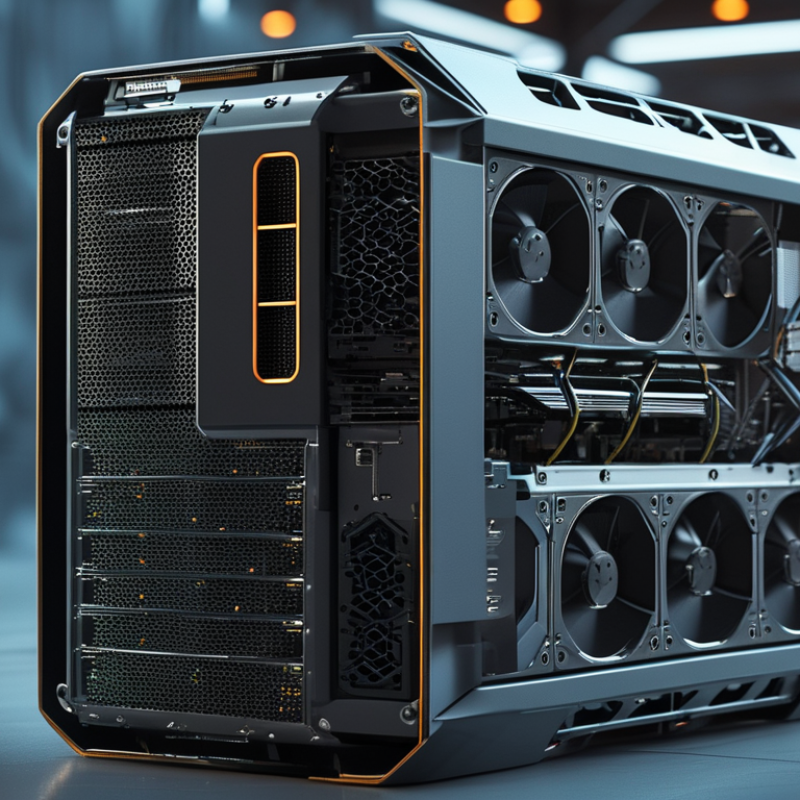
What Defines a Leading Chinese AI Server Manufacturer?
What Defines a Leading Chinese AI Server Manufacturer?
A leading Chinese AI server manufacturer must prove more than fast hardware delivery. IDC estimates global AI infrastructure spending will reach 154 billion dollars in 2024. That growth raises buyer expectations. Strong manufacturers combine high-density computing, tested GPU compatibility, and stable memory performance. They also publish clear thermal and power data. Vague specifications create unnecessary risk.
Cooling is critical. Uptime Institute’s 2024 Global Data Center Survey reported an average power usage effectiveness of 1.56. A serious supplier should show how its systems perform under sustained workloads, not only short laboratory tests. Direct-liquid cooling, airflow design, and rack-level monitoring can reduce heat problems. Small details matter. Cable layout matters too.
Reliability also depends on service experience. Buyers should examine failure rates, spare-part access, firmware updates, and response times across regions. Independent testing, including MLPerf results, can support performance claims, but one benchmark cannot represent every workload. No scorecard is perfect. A manufacturer may offer impressive computing density yet lack mature overseas support. That gap deserves attention. Transparent documentation, traceable components, recognized safety certifications, and practical integration experience better reflect E-E-A-T principles. The strongest suppliers accept technical questions and disclose limitations instead of promising effortless deployment.
China’s Top 10 AI Server Manufacturers for Global Buyers
China’s Top 10 AI Server Manufacturers for Global Buyers should be judged beyond production volume. Global buyers need tested systems, stable supply chains, and clear after-sales support. IDC’s Worldwide Quarterly Server Tracker shows accelerating demand for accelerated computing, while TrendForce projected global AI server shipments would exceed 1.6 million units in 2024. These figures explain the expanding Chinese supplier base.
The leading ten manufacturers typically cover OEM production, ODM design, and specialized system integration. Their platforms may support eight-GPU nodes, high-speed networking, liquid cooling, and dense rack deployment. Buyers should request benchmark results using their own models, not only laboratory figures. Check power consumption at sustained load. Check replacement-part availability across borders. Small details matter.
Some suppliers appear impressive on paper but provide weak documentation or unclear warranty terms. That remains a practical concern. Gartner’s research on infrastructure procurement repeatedly emphasizes lifecycle management, resilience, and operational costs, not hardware price alone. A reliable evaluation should compare inference latency, training throughput, thermal behavior, firmware updates, and data-center compatibility. The “top ten” list is therefore useful, but not absolute. Local service capability, export compliance, and long-term support can change the ranking for each buyer.
Key Technologies and Product Strengths of Each Manufacturer
Global buyers should compare AI server manufacturers through architecture, cooling, software, and service depth. The first manufacturer focuses on dense GPU systems with high-speed interconnects. Its platforms suit model training and large-scale inference. The second combines multi-GPU nodes with liquid cooling. This design reduces thermal limits in compact data centers. The third emphasizes custom accelerator servers. Its products can lower power use for specific workloads. The fourth builds flexible systems for research teams. Buyers can change memory, storage, and accelerator layouts more easily.
The fifth manufacturer develops inference servers with strong networking. These systems support real-time analytics, language applications, and video processing. The sixth offers edge-focused hardware with rugged chassis and remote management. It fits factories, hospitals, and branch locations. The seventh concentrates on energy efficiency. Its servers use airflow control, power monitoring, and modular components. The eighth provides integrated racks with tested firmware and cabling. That approach can shorten deployment time. It may also limit customization.
The ninth manufacturer is known for cloud-scale platforms. Its designs emphasize automation, telemetry, and large cluster expansion. The tenth targets smaller enterprises with standard configurations and practical support. Its systems may offer better purchasing simplicity. However, lower entry cost does not always mean lower ownership cost. Buyers should test sustained performance, noise, service response, and firmware stability. Specifications can look impressive on paper. Real workloads often reveal bottlenecks. I would request a pilot installation before signing a large order. Cooling assumptions are frequently too optimistic. Support quality also varies by region, not only by manufacturer. Reliable procurement requires documented tests, clear warranties, and local technical expertise.
How to Compare AI Server Brands for Different Workloads
Comparing AI server manufacturers requires matching hardware to workload, not chasing headline specifications. Training clusters need high memory bandwidth, fast accelerators, and low-latency interconnects. Inference systems need predictable response times, efficient cooling, and flexible memory capacity. The 2025 Stanford AI Index Report found that GPT-3.5-level inference costs fell more than 280-fold between late 2022 and late 2024. That shift makes energy efficiency and software optimization more important than peak performance alone.
For large model training, compare accelerator density, network throughput, fault recovery, and liquid-cooling options. For real-time inference, measure tokens per second, response latency, power per request, and support for smaller models. The International Energy Agency estimates that data centers used about 415 TWh of electricity in 2024. Global consumption could approach 945 TWh by 2030. These figures make operating cost a serious purchasing factor. Yet published benchmark results can be incomplete. Your workload may perform differently after quantization, model tuning, or firmware changes.
Tips: Request a proof-of-concept using your own model and data. Record performance over several hours, not one short test. Check warranty response times, spare-part access, rack weight, noise, and regional service coverage. Ask for complete power figures, including networking and cooling. A cheaper server can become expensive when deployment teams spend weeks correcting compatibility problems.
China Top 10 AI Server Manufacturers for Global Buyers? - How to Compare AI Server Brands for Different Workloads
| Anonymous Manufacturer Profile |
Typical Server Format |
GPU Capacity |
CPU Configuration |
System Memory |
High-Speed Networking |
Primary Workload Fit |
Inference |
Model Training |
Scalability |
Typical Power Range |
Buyer Selection Focus |
| Profile 01 |
4U GPU server |
8 double-width GPUs |
2-socket x86 platform |
Up to 2 TB DDR5 ECC |
8 × 400 Gb/s InfiniBand or Ethernet |
Large-scale language-model training |
Strong |
Excellent |
Excellent |
8–12 kW per chassis |
GPU interconnect, cooling capacity and cluster management |
| Profile 02 |
2U GPU server |
4 double-width GPUs |
2-socket x86 platform |
Up to 1 TB DDR5 ECC |
2–4 × 200 Gb/s Ethernet |
Enterprise model fine-tuning |
Excellent |
Strong |
Strong |
4–7 kW per chassis |
Rack density, serviceability and accelerator availability |
| Profile 03 |
1U accelerator server |
2–4 single-width accelerators |
1- or 2-socket x86 platform |
256 GB–1 TB DDR5 ECC |
2 × 100 Gb/s Ethernet |
Real-time generative-AI inference |
Excellent |
Moderate |
Strong |
1.2–2.5 kW per chassis |
Latency, tokens per second and power efficiency |
| Profile 04 |
4U liquid-cooled server |
8 high-power double-width GPUs |
2-socket x86 platform |
Up to 4 TB DDR5 ECC |
400–800 Gb/s fabric options |
High-performance computing and simulation |
Strong |
Excellent |
Excellent |
10–16 kW per chassis |
Liquid-cooling design, sustained performance and facility readiness |
| Profile 05 |
2U storage-intensive AI server |
2–4 GPUs |
2-socket x86 platform |
512 GB–2 TB DDR5 ECC |
100–200 Gb/s Ethernet |
Retrieval-augmented generation and data analytics |
Excellent |
Strong |
Strong |
2.5–5 kW per chassis |
NVMe capacity, storage throughput and data protection |
| Profile 06 |
4U multi-node server |
4 independent GPU nodes |
1-socket CPU per node |
128–512 GB DDR5 ECC per node |
25–100 Gb/s Ethernet |
Distributed inference and departmental AI |
Excellent |
Moderate |
Strong |
3–6 kW per chassis |
Fault isolation, node replacement and flexible deployment |
| Profile 07 |
4U workstation-class server |
4–8 GPUs |
2-socket x86 or workstation CPU platform |
256 GB–1 TB ECC memory |
25–100 Gb/s Ethernet |
Computer vision and video analytics |
Excellent |
Strong |
Moderate |
3–8 kW per chassis |
Video decode support, expansion slots and application compatibility |
| Profile 08 |
1U edge AI server |
1–2 low-profile accelerators |
Single-socket x86 or ARM platform |
64–256 GB ECC memory |
10–25 Gb/s Ethernet |
Retail, manufacturing and telecom edge inference |
Excellent |
Limited |
Moderate |
0.4–1.2 kW per chassis |
Operating temperature, compact dimensions and remote management |
| Profile 09 |
8U liquid-cooled training node |
8–10 high-power GPUs |
2-socket x86 platform |
Up to 4 TB DDR5 ECC |
800 Gb/s class cluster fabric |
Foundation-model pre-training |
Strong |
Excellent |
Excellent |
12–20 kW per chassis |
Scale-out efficiency, thermal design and fabric topology |
| Profile 10 |
2U general-purpose AI server |
2–4 GPUs or accelerator cards |
2-socket x86 platform |
256 GB–1.5 TB DDR5 ECC |
25–100 Gb/s Ethernet |
Mixed enterprise AI workloads |
Strong |
Strong |
Strong |
2–6 kW per chassis |
Lifecycle cost, upgrade paths and workload flexibility |
Comparison values represent common configuration ranges for enterprise AI server platforms. Actual performance, supported accelerators, networking standards, power consumption and compliance options vary by configuration and deployment environment.
Global Purchasing, Compliance, Support, and Delivery Considerations
Buying AI servers from China requires more than comparing processor counts and quoted prices. Global buyers should verify the manufacturer’s legal registration, production capacity, quality controls, and export experience. Request current test reports, product specifications, serial-number policies, and clear warranty terms. Details matter.
Compliance must be checked before payment.
Confirm the destination country’s import rules, electrical safety requirements, radio regulations, energy standards, and data-security obligations. Product classification and customs documents should match the actual configuration, including accelerators, memory, storage, and networking equipment. Ask for evidence. A supplier’s certificate may not cover every model or destination. Independent inspection can reveal missing labels, unsuitable power cables, or packaging weaknesses.
Delivery planning should include factory lead time, port handling, customs clearance, installation, and replacement-part availability. Use a written acceptance procedure with performance tests, noise limits, thermal readings, and burn-in results. A small pilot order is often safer than an immediate fleet purchase. Plan for delays. In practical sourcing work, the spreadsheet rarely shows everything; firmware compatibility, local service skills, and communication gaps can create unexpected costs. Buyers should also confirm remote-support access, escalation contacts, and repair timelines before signing. Some suppliers provide strong hardware but weak after-sales coordination, which deserves honest evaluation.
Conclusion
China has become an important source of AI computing infrastructure, offering manufacturers with capabilities across GPU servers, accelerator platforms, high-density data center systems, and customized enterprise solutions. This guide explains what defines a leading Chinese AI server manufacturer, including engineering expertise, production reliability, supply-chain strength, energy efficiency, system integration, and long-term technical support. It also presents a practical framework for comparing global ai server manufacturers according to workloads such as model training, inference, cloud computing, scientific research, and large-scale data processing.
The article further examines the key technologies and product strengths that distinguish different manufacturers, including thermal management, networking, storage expansion, remote management, and flexible configuration. For international buyers, it highlights essential considerations such as hardware compatibility, certifications, cybersecurity practices, warranty terms, spare-parts availability, customs documentation, delivery timelines, and after-sales service. By evaluating performance, total cost of ownership, scalability, and compliance requirements together, buyers can select AI server solutions that align with both current workloads and future growth.
 Vornaxis
