Vornaxis
Vornaxis
Vornaxis
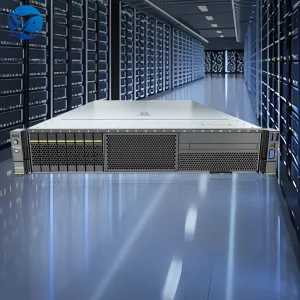
Over the past five years, Poland has emerged as the digital heartbeat of Central and Eastern Europe (CEE). With global tech giants establishing massive "cloud regions" in Warsaw, the demand for localized high-performance computing (HPC) hardware has surged exponentially. The Polish enterprise ecosystem—spanning FinTech institutions in Warsaw, automated manufacturing in Silesia, and software development hubs in Kraków and Wrocław—requires resilient, on-premises AI GPU hardware to comply with strict European data sovereignty laws and the EU AI Act.
Rather than relying purely on latency-prone public cloud infrastructures, Polish organizations are actively building private AI clouds. By deploying high-density GPU server clusters locally, they can dramatically reduce operational latency while keeping proprietary training datasets, such as those used for large language model (LLM) fine-tuning (e.g., DeepSeek-R1 and Llama architectures), securely within national borders. This shift demands cost-effective, high-throughput hardware architectures direct from specialized manufacturers.
Strict GDPR & Data Sovereignty: Local processing is imperative for finance, healthcare, and public sector applications, making localized hardware deployments a operational necessity.
Aggressive PUE Goals: Polish data center operators are targeting Power Usage Effectiveness (PUE) metrics below 1.25, driving massive interest in liquid-cooled GPU servers and high-efficiency Titanium power supply units (PSUs).
The DeepSeek Revolution: Low-cost, highly efficient LLMs like DeepSeek-R1 have shifted the purchasing trend from monolithic hyperscaler cloud instances to highly specialized local 2U/4U multi-GPU server deployments.
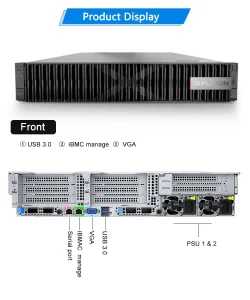
Keeping pace with rapid algorithmic shifts requires state-of-the-art physical computing platforms designed for maximum thermal dissipation and high bus-bandwidth.
Modern workloads require massive data throughput. Our servers integrate PCIe Gen 5.0 lanes, doubling the bandwidth of Gen 4, to ensure seamless communication between host CPUs and high-performance accelerator cards. This minimizes bottlenecks during complex parallel processing tasks in LLM pre-training.
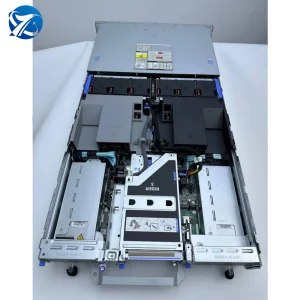
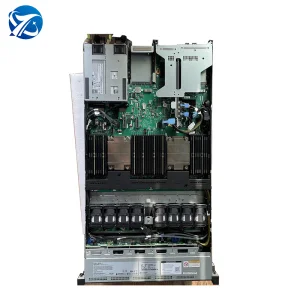
As modern GPU TDP (Thermal Design Power) exceeds 500W per card, traditional air cooling reaches its physical limits. We offer custom liquid loop cooling blocks and high-airflow chassis variants designed to optimize thermal paths, reducing datacenter fan power overhead and extending hardware MTBF (Mean Time Between Failures).
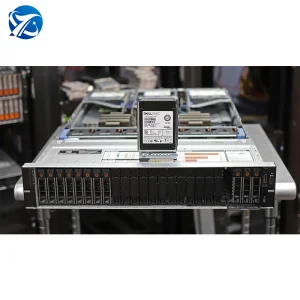
Processing multimodal AI models demands ultra-fast system memory. By structuring dual-socket Intel Xeon Scalable or AMD EPYC configurations with multichannel DDR5 memory and high-capacity NVMe SSD arrays with Power Loss Protection (PLP), our servers eliminate read/write latency overheads.
How our optimized high-tech production infrastructure in Shenzhen translates to premium quality and competitive advantages for the European market.
Vornaxis Compute Ltd. operates an integrated, high-precision customization laboratory and assembly facility in Shenzhen. Through deep partnerships with over 850 global supply chain vendors, we bypass component allocation backlogs to secure high-demand GPUs, enterprise-grade CPUs, and DDR5 RAM modules at direct OEM prices.
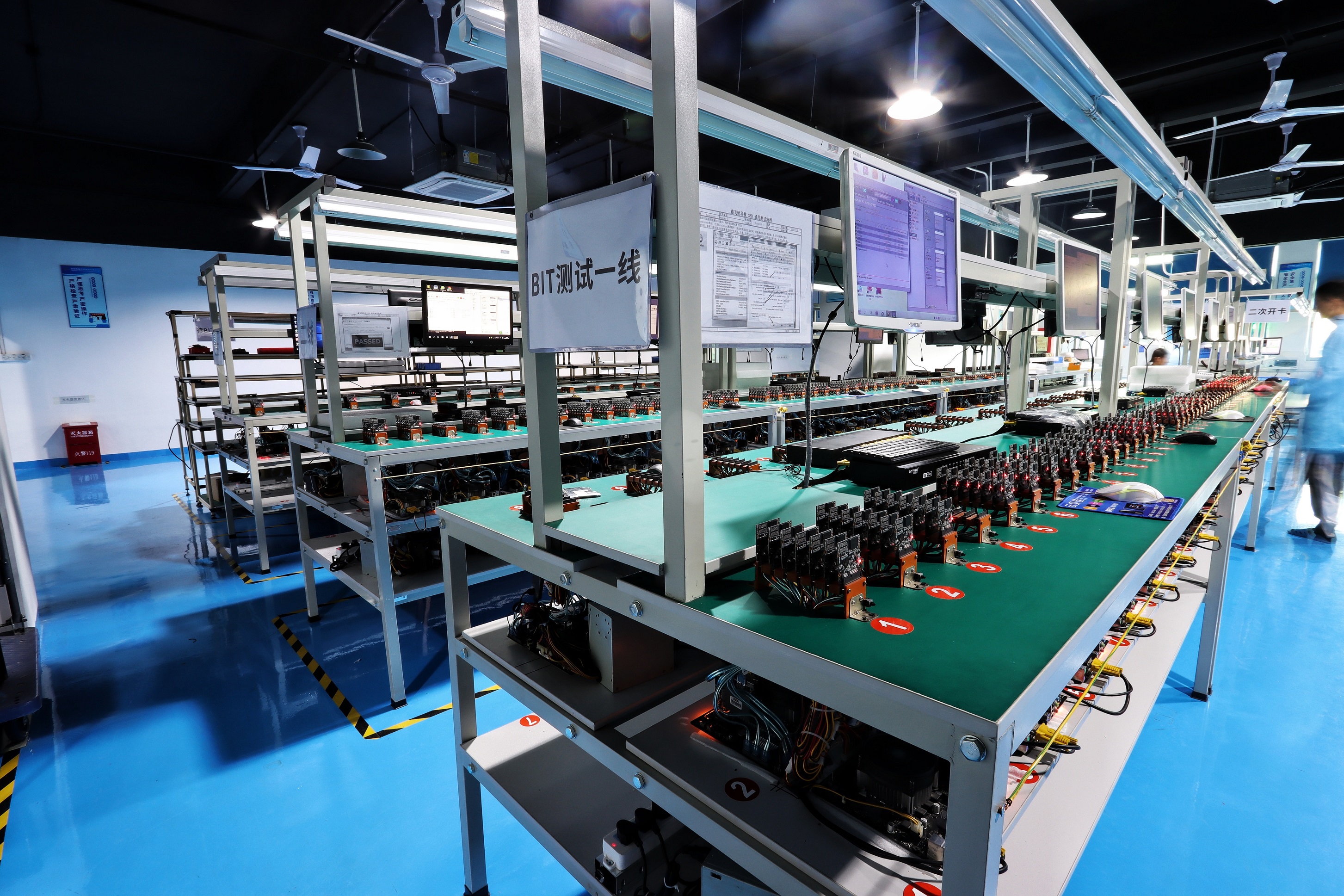
Every server undergoes a rigorous multi-stage validation process before being packed and dispatched. Our 45 dedicated quality control professionals implement Automated Optical Inspection (AOI), full-load system burn-in testing under elevated thermal conditions (up to 40°C environment chambers), and custom firmware flash validation. This guarantees that when your GPU servers arrive in Poland, they are ready for immediate plug-and-play cluster integration.
Tailoring system configurations to meet the specific workload profiles of Central European enterprises and institutions.
High-frequency trading desk models and real-time fraud detection systems rely on low-latency calculations. Dual-socket rack servers equipped with high-clock Xeon processors and dedicated low-profile GPUs provide the optimal compute-density needed for sub-millisecond market simulation and predictive modeling.
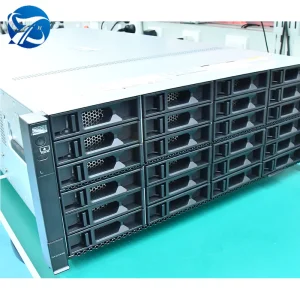
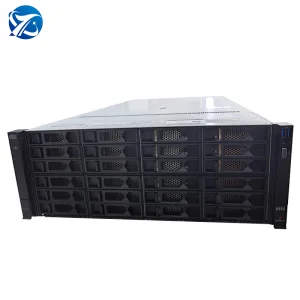
As the primary logistics corridor connecting Western Europe and the East, Poland's distribution hubs utilize AI for dynamic routing, predictive inventory maintenance, and autonomous fleet orchestration. Our storage-heavy GPU servers deliver the necessary parallel processing capacity to run real-time combinatorial optimization models.
Polish technical universities require scalable GPU clusters for quantum simulation, bioinformatics, and climatological projections. We customize multi-GPU servers with native InfiniBand or 100G RoCE v2 interfaces to facilitate seamless horizontal scaling inside academic datacenters.
Operational transparency and technical parameters backing our global hardware distribution networks.
| Operational Parameter | Technical Capability & Standards | Strategic Advantage for Polish Buyers |
|---|---|---|
| Quality Inspection | ISO 9001, RoHS Compliant, AOI Testing, Full System Burn-in Validation | Ensures zero-hardware failure upon deployment in EU datacenters. |
| Customization Options | L10 Rack-level integration, Custom BIOS/Firmware tuning, OEM labeling | Tailor power limits, boot profiles, and thermal fan curves for specific locations. |
| Supply Chain Partnerships | Direct allocation channels with ~850 Global Upstream Vendors | Bypass long waitlists for high-demand GPUs and DDR5 components. |
| Export Logistics Hub | Shenzhen HQ to Warsaw direct air/rail transit tracking | Optimized customs documentation ensuring smooth entry into the EU. |
| R&D Scale | 160 specialized hardware and firmware engineers | Ability to design bespoke cooling solutions and custom PCIe topologies. |
Addressing crucial technical questions raised by IT Directors, Chief Technology Officers, and Datacenter Architects during hardware sourcing.
A: Typically, ocean freight requires 35 to 45 days, rail freight via the New Silk Road takes 15 to 20 days, and air freight takes 5 to 7 working days to reach Warsaw Chopin Airport or direct logistic centers. We manage all export declarations and provide fully compliant documentation—including CE markings, RoHS testing logs, and EU-compliant packaging certificates—ensuring minimal customs delays at EU entry points.
A: Our server platforms use 80 PLUS Platinum or Titanium certified hot-swappable redundant power supplies (up to 96% efficiency under typical loads). We customize server firmware configurations to support aggressive low-power idle modes and speed-stepping, complying with the EU ErP Lot 9 efficiency and circular economy requirements.
A: Yes. For large models like DeepSeek-R1 (which requires extensive high-speed FP8 or BF16 compute capacity), we configure systems with high-density GPU accelerators utilizing NVLink or high-bandwidth PCIe Gen 5 interconnects. We optimize the CPU memory channels and build fast storage pools using U.2/U.3 NVMe SSDs in RAID configurations to maximize context window processing efficiency.
A: We provide dual cooling layouts. For standard datacenters, we supply heavy-duty 38,000 RPM hot-swappable counter-rotating fans coupled with custom air-shroud paths. For green facilities aiming for lower PUE, we implement custom direct-to-chip (D2C) cold plates targeting critical chips (GPU & CPU), connecting to external liquid manifold loops.
A: Absolutely. Our R&D team configuration covers firmware-level customization. We can pre-configure BIOS settings for SR-IOV (Single Root I/O Virtualization), enable AMD-V/Intel VT-x, lock PCIe lanes to target generations, and implement custom secure boot certificates to align with your organization’s security guidelines.
A transparent look inside our manufacturing space, validation labs, and packing warehouses.

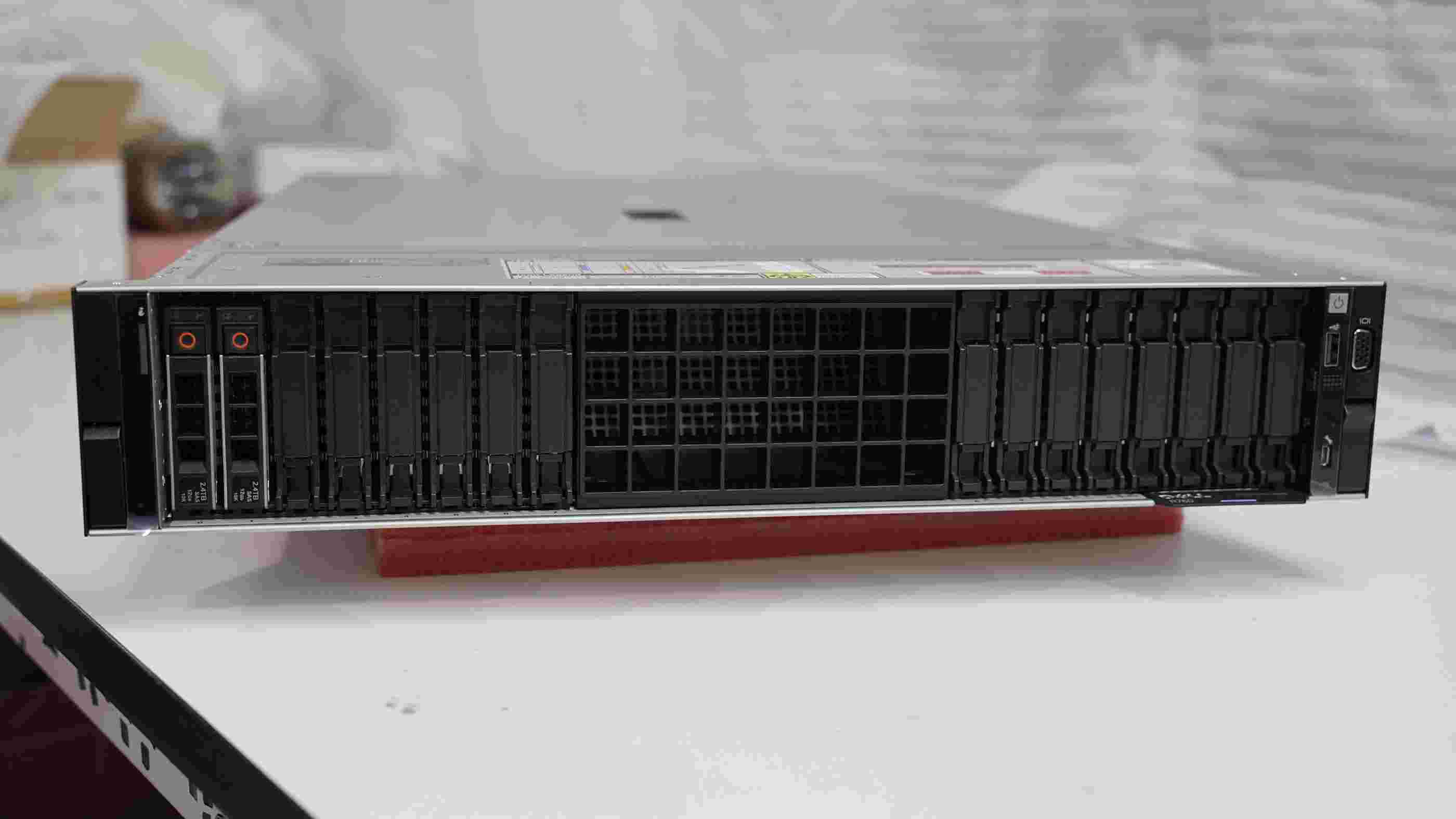

Contact our senior structural engineers and global logistics team today to acquire customized hardware solutions, technical documentation, and bulk quote allocations.
Email response guaranteed within 12 business hours. NDA supported.